

What nobody in the F&B industry wants to admit out loud.
There is a cost that sits quietly on every restaurant's balance sheet. It does not show up as a single big line item. It hides inside the printing bill, the last-minute reprint, the waiter standing at the table answering the same questions, the item that sold out three hours ago but is still on the menu in every customer's hand.
Paper menus. The ones that feel premium. The ones that have always been there.
They are costing Pune restaurants far more than most owners realise.
The Silent Drain: A Real Cost Breakdown
This is where restaurants lose money silently.
Let us look at a mid-size cafe in Pune. Around 40 covers, running two meal services a day, seasonal menu updates every two to three months.
Paper Menu Annual Cost Estimate
- Initial design and printing (50 menus, laminated): Rs. 8,000 to Rs. 15,000 per print run
- Seasonal reprints (3 to 4 times a year): Rs. 24,000 to Rs. 60,000 per year
- Damage and replacement (torn, stained, worn menus): Rs. 5,000 to Rs. 10,000 per year
- Last-minute item change stickers or manual strike-throughs: Rs. 2,000 to Rs. 5,000 per year
- Staff time explaining unavailable items: this one has no invoice, but it is real
Conservative total: Rs. 39,000 to Rs. 90,000 per year.
For a restaurant with thin margins, that is not a small number. And it compounds. Every year.
Now here is what a digital menu costs.
- Setup: one-time cost, no physical reprints ever
- Menu updates: done in minutes, any time, from your phone
- Item unavailability: toggle it off instantly, no crossed-out items, no awkward waiter conversations
The cost advantage alone is enough to make any serious restaurant owner pause. But the real story is not the cost. The real story is what happens to revenue.
The Ordering Psychology Nobody Explains to You
The real reason menus are changing is not just cost. It is human behaviour.
When a customer holds a paper menu, they are in passive mode. They read what is there. They pick something they recognize. The process is fast and low-effort.
When a customer browses a well-designed digital menu, something different happens.
- They see photos. Food photography increases order rates for photographed items by 30 to 40 percent, according to multiple hospitality studies. Paper menus almost never have photos because printing them is expensive.
- They see descriptions. A digital menu gives space to describe a dish properly. "Slow-cooked pulled chicken in a smoky chipotle glaze, served with garlic bread" sells more than "chicken sandwich."
- They see add-ons. Digital menus surface upsells naturally. Extra cheese. Larger size. Side dish. Dessert pairing. These are suggestions that a waiter may forget or feel uncomfortable pushing.
- They browse longer. More browsing means a higher average order value. It is that simple.
Restaurants that switch to digital menus consistently report an increase in average order value. Some see it go up by 10 percent. Others see 20 to 25 percent. The difference is not magic. It is design and visibility doing the work that a paper menu never could.
And yet, this is the part most people skip when they talk about menus. They focus on cost savings. The revenue upside is the bigger conversation.
Wait. Are Digital Menus Actually Bad?
Let us be honest here. Because this matters for credibility, and your customers will bring it up.
There are legitimate complaints about digital menus. Not everything that is new is better, and not every restaurant should rush into this.
Some guests genuinely prefer paper
Older diners, guests who do not want a screen in their face during a meal, and people who find digital menus impersonal all have a point. Fine dining restaurants, in particular, have found that paper or leather-bound menus contribute to the premium experience they are charging for. Nobody wants to look at a phone screen at a candlelit dinner.
For certain restaurant categories, this matters. A dhaba, a heritage dining experience, or an upscale tasting menu restaurant may rightly choose to keep physical menus as part of the brand identity.
QR menus fail more often than people admit
This is the part that QR menu companies do not put in their sales pitch.
- QR codes require the customer to open their camera, scan, wait for the link to load, and then navigate the menu. That is three to five steps before they see a single dish.
- If the restaurant Wi-Fi is slow or the customer has a poor data signal, the menu loads badly or not at all.
- Customers who do not understand how to scan a QR code are left frustrated, and nobody wants to ask a waiter for help with technology.
- QR menus became common quickly. That does not mean they became good quickly.
The frustration is real. And it has pushed some restaurants back to paper. Which is a completely understandable overcorrection to a genuine problem.
NFC Tap Menus: The Evolution That Fixes Both Problems
Here is where the story gets interesting.
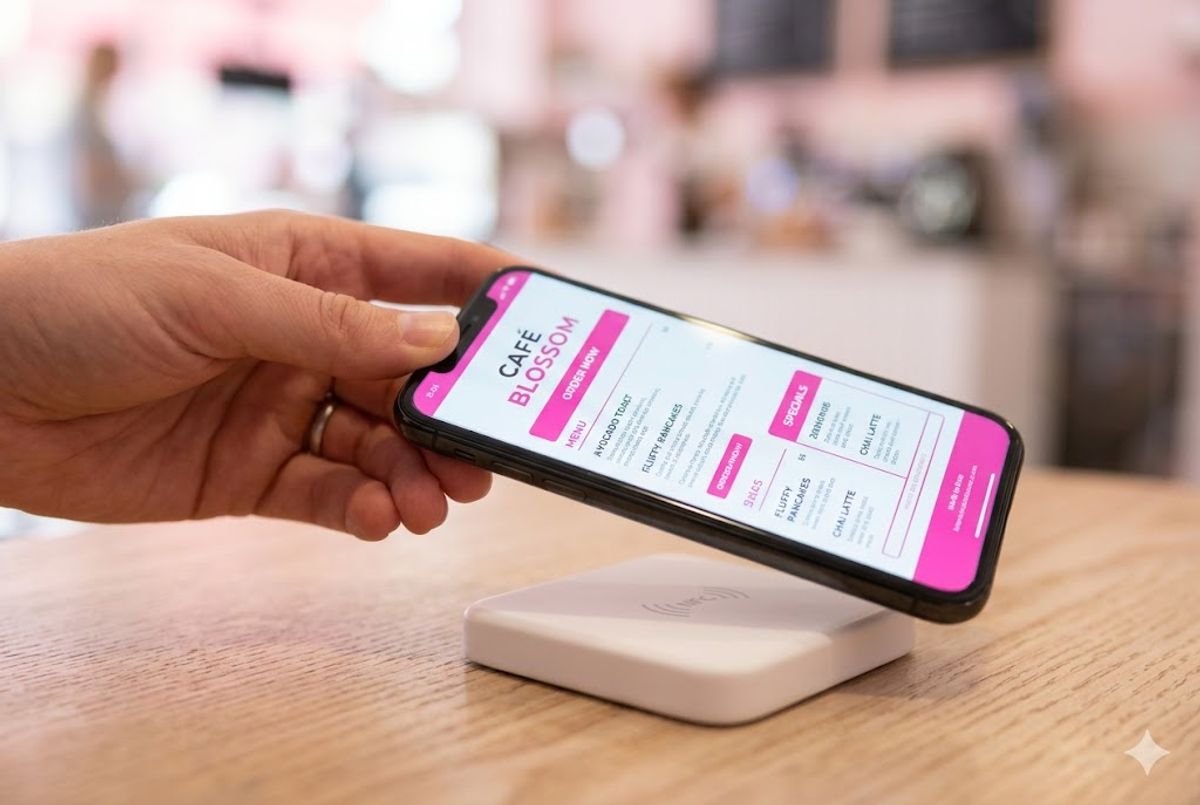
NFC, or Near Field Communication, is the same technology that powers contactless payments on your phone. You tap. It works. There is no scanning, no camera, no waiting for a link to load.
A customer walks in. They see a small, elegant card or stand on the table. They tap their phone to it. The menu opens instantly, full-screen, beautifully designed. No QR code. No login. No friction.
This is not an incremental improvement on QR menus. It is a different experience entirely.
Why NFC works better for Indian restaurants specifically
- Every modern Android and iPhone supports NFC natively. No app download needed.
- The tap gesture feels premium. It matches the contactless payment behavior customers already do at every POS counter.
- It works even on slow connections once the initial load is cached.
- It eliminates the camera-open-scan-wait sequence that makes QR menus feel like a chore.
- It positions your restaurant as modern without being gimmicky.
The guest who disliked QR menus disliked the friction, not the concept. NFC removes the friction. The guest who prefers the premium feel of something physical still gets a physical object at the table, just one that does not cost you Rs. 60,000 a year to maintain.
It is the smart middle ground between paper and QR. And it is where the F&B industry is heading.
What Restaurant Owners in Pune Are Actually Saying
The feedback from cafes and restaurants that have made the switch follows a pattern.
- The first month feels like an adjustment. Staff need to get used to it. A few older customers ask about it.
- By the second month, the questions stop. Customers tap and scroll naturally.
- The menu update that used to mean a phone call to the designer, a three-day wait, and a printing cost now takes four minutes on the owner's phone.
- Nobody asks for paper menus back.
The transition is smaller than most owners expect. The ongoing benefit is larger than most owners expect. That gap is where the real value lives.
What Should a Pune Restaurant Owner Actually Do?
Not every restaurant needs to make the switch today. Here is an honest framework.
You should strongly consider NFC menus if
- You update your menu seasonally or more frequently
- You run a cafe, casual dining, or quick service restaurant targeting a younger or mid-age urban crowd
- You want to showcase food photography without paying for premium print design every time
- You want a menu experience that does not embarrass you next to modern competition
You might wait if:
- You run a heritage or fine dining restaurant where the physical menu is part of the brand story
- Your primary customer base is 60-plus and strongly resistant to any screen at the table
Even in those cases, the cost argument eventually wins. Paper menus do not get cheaper. Printing costs go up. Reprints pile up. The question is not whether to make the shift. The question is when.
The Takeaway
Paper menus are not bad. They are just expensive, slow to update, and quietly leaving revenue on the table.
QR menus were the right idea with the wrong execution.
NFC tap menus are the version that actually works. Instant. Frictionless. Updatable in real time. And designed to show your food the way it deserves to be shown.
For restaurants in Pune trying to grow their revenue without growing their costs, this is not a small detail. This is a lever.
Pull it.
About Naira Menus
Naira Menus is a restaurant technology platform built for Indian restaurants. Naira Tap is our NFC-powered digital menu product, designed to replace paper menus with a tap-to-browse experience that works instantly, updates in real time, and increases average order value
Socials Link -
Instagram
LinkedIn
X (Twitter)
Reddit
Facebook
YouTube